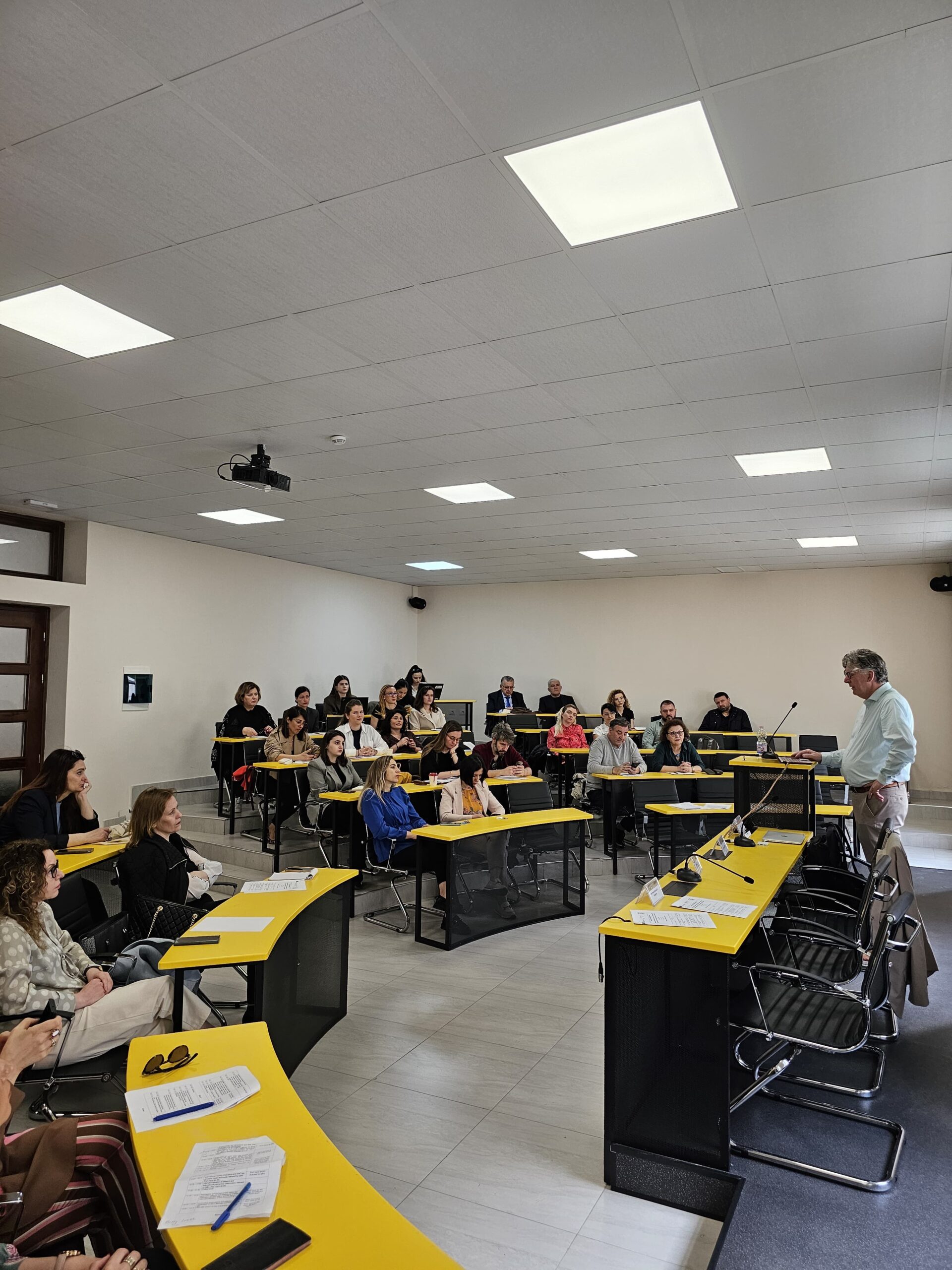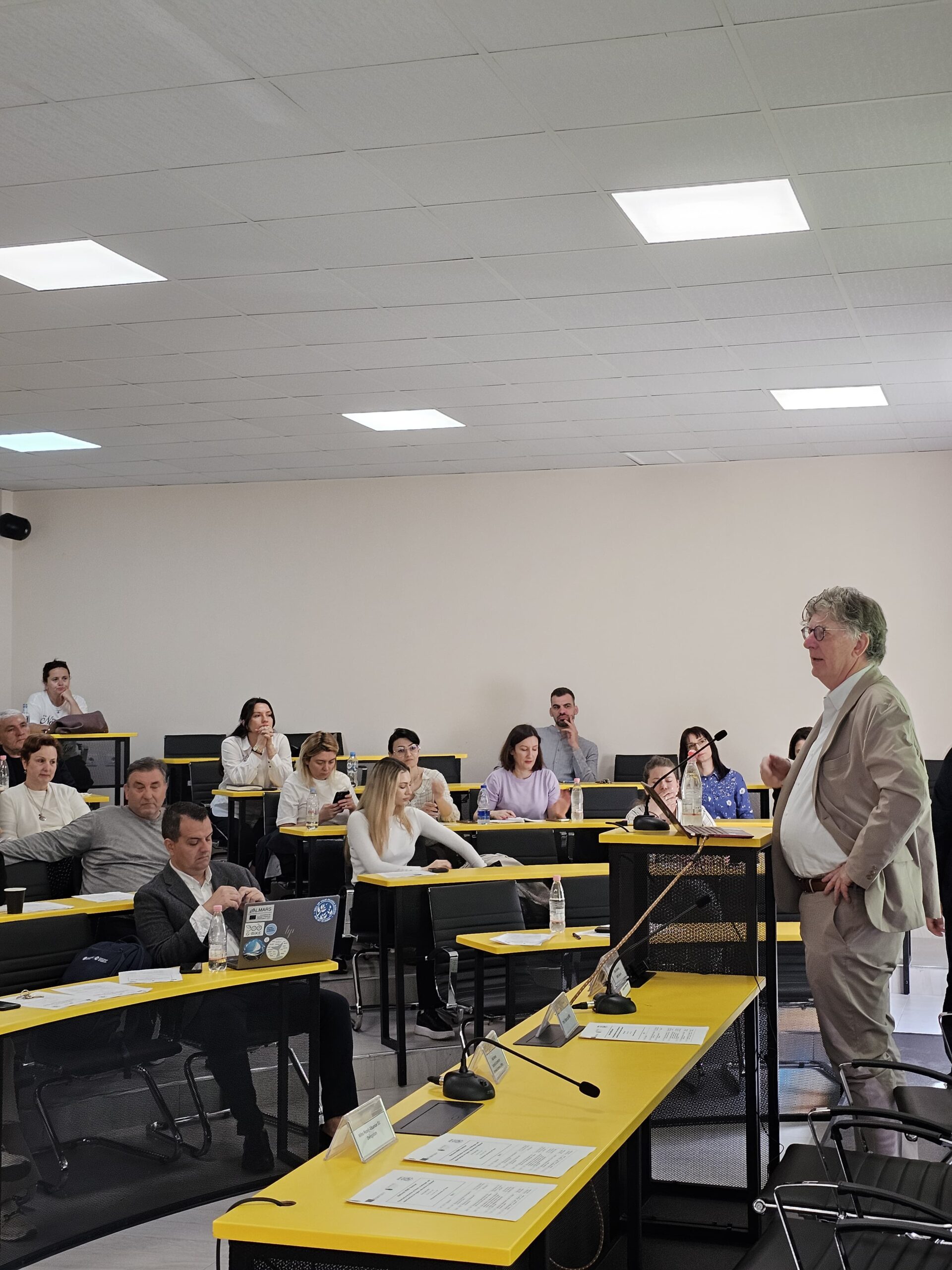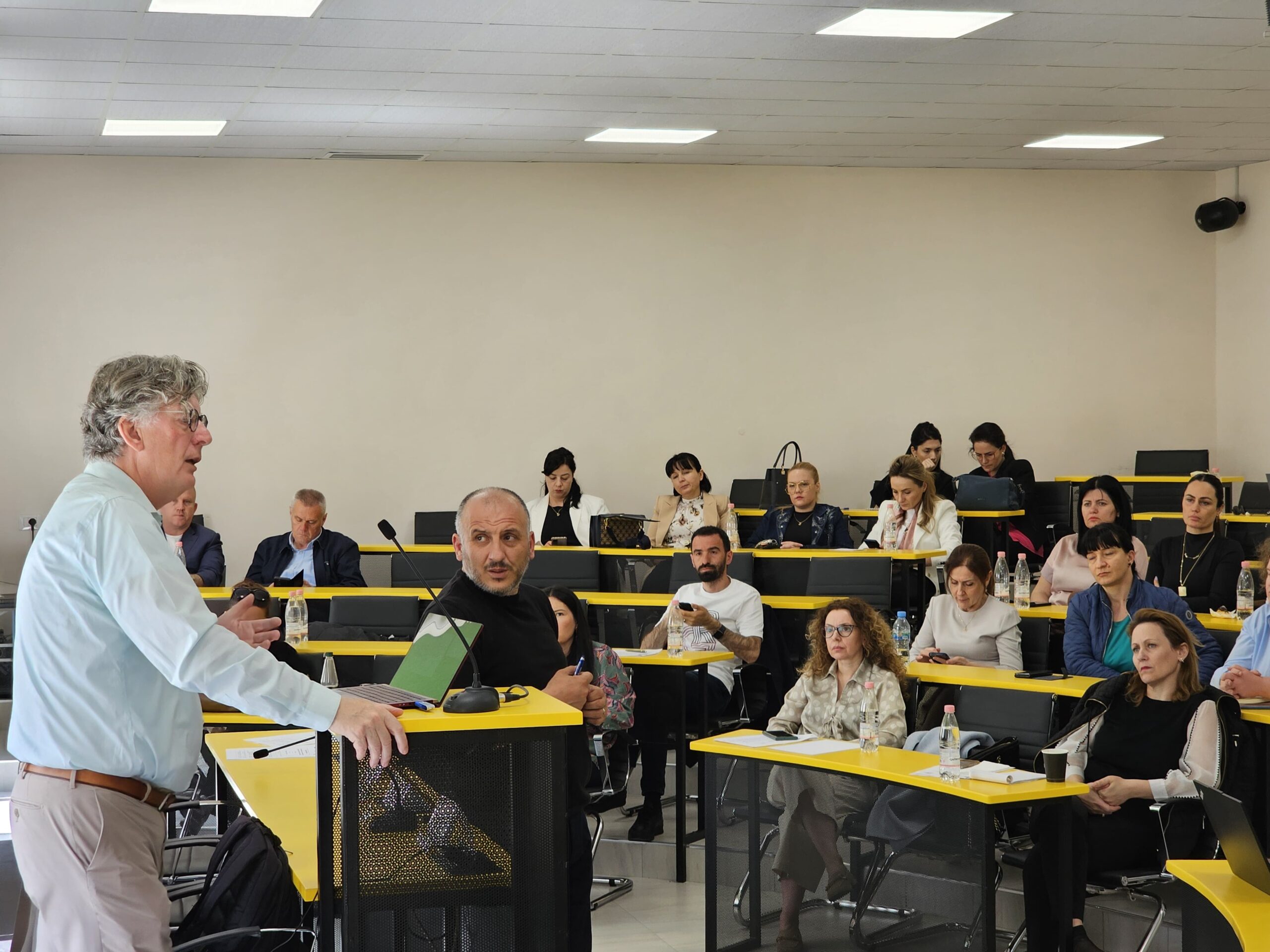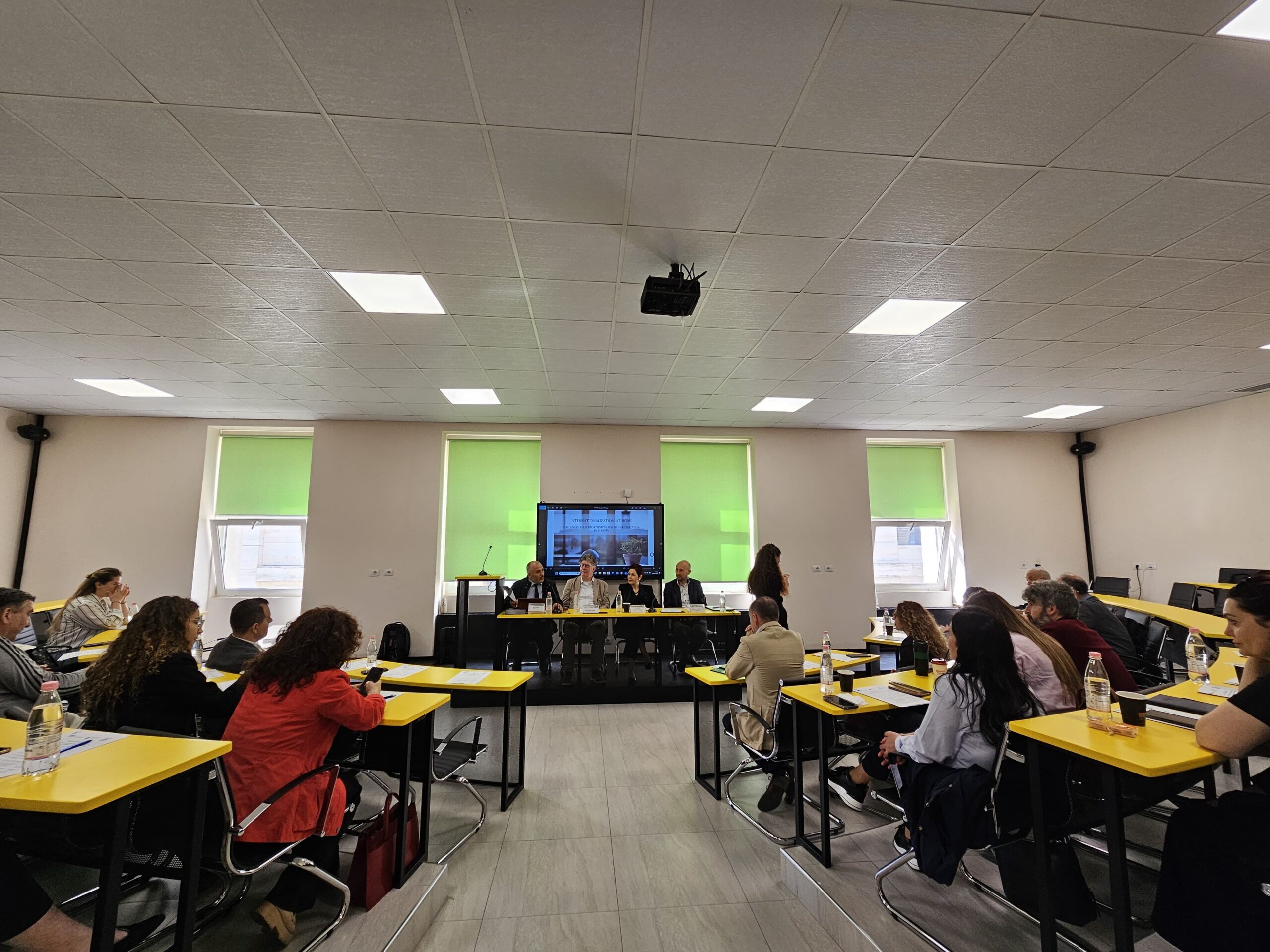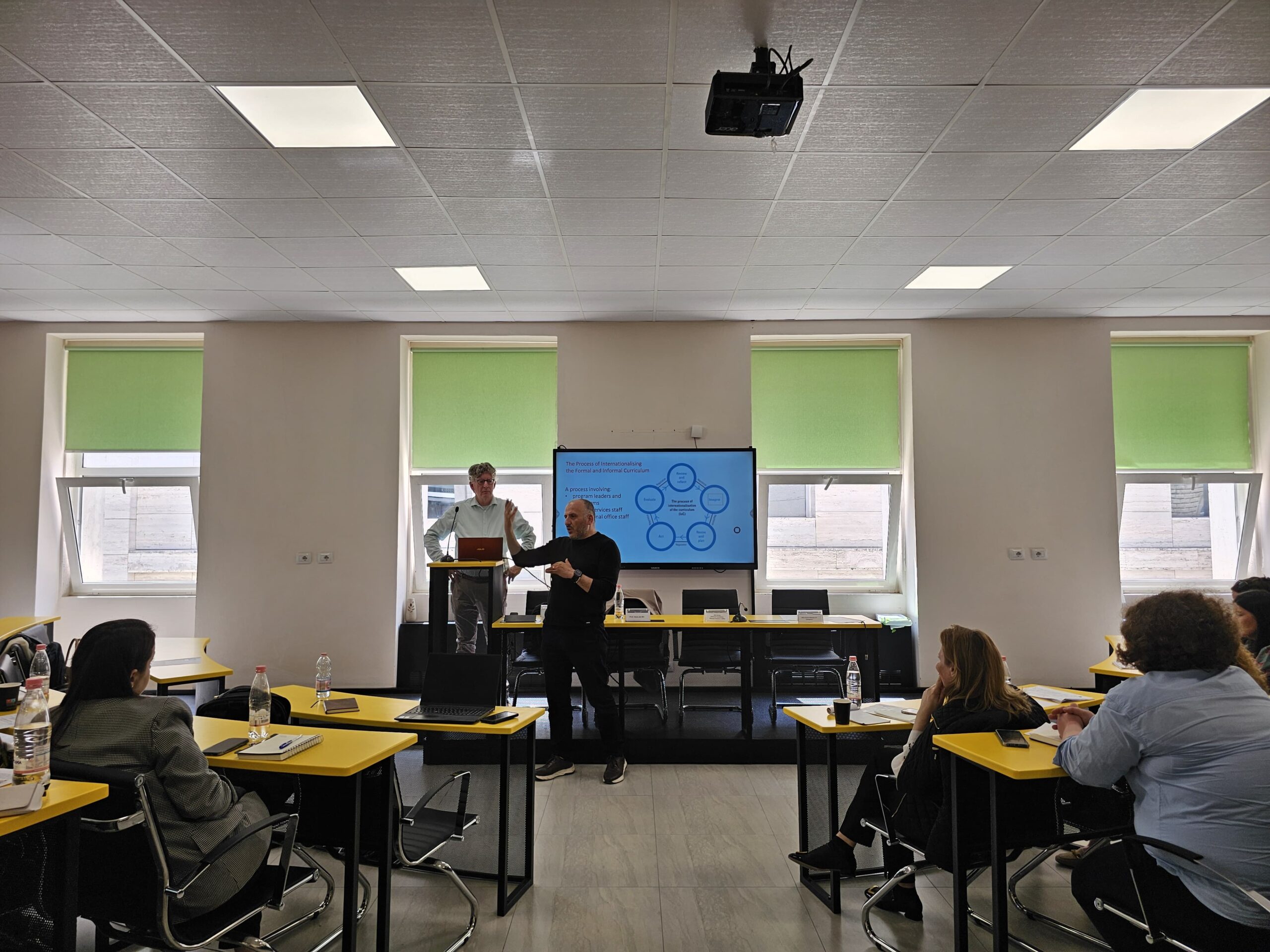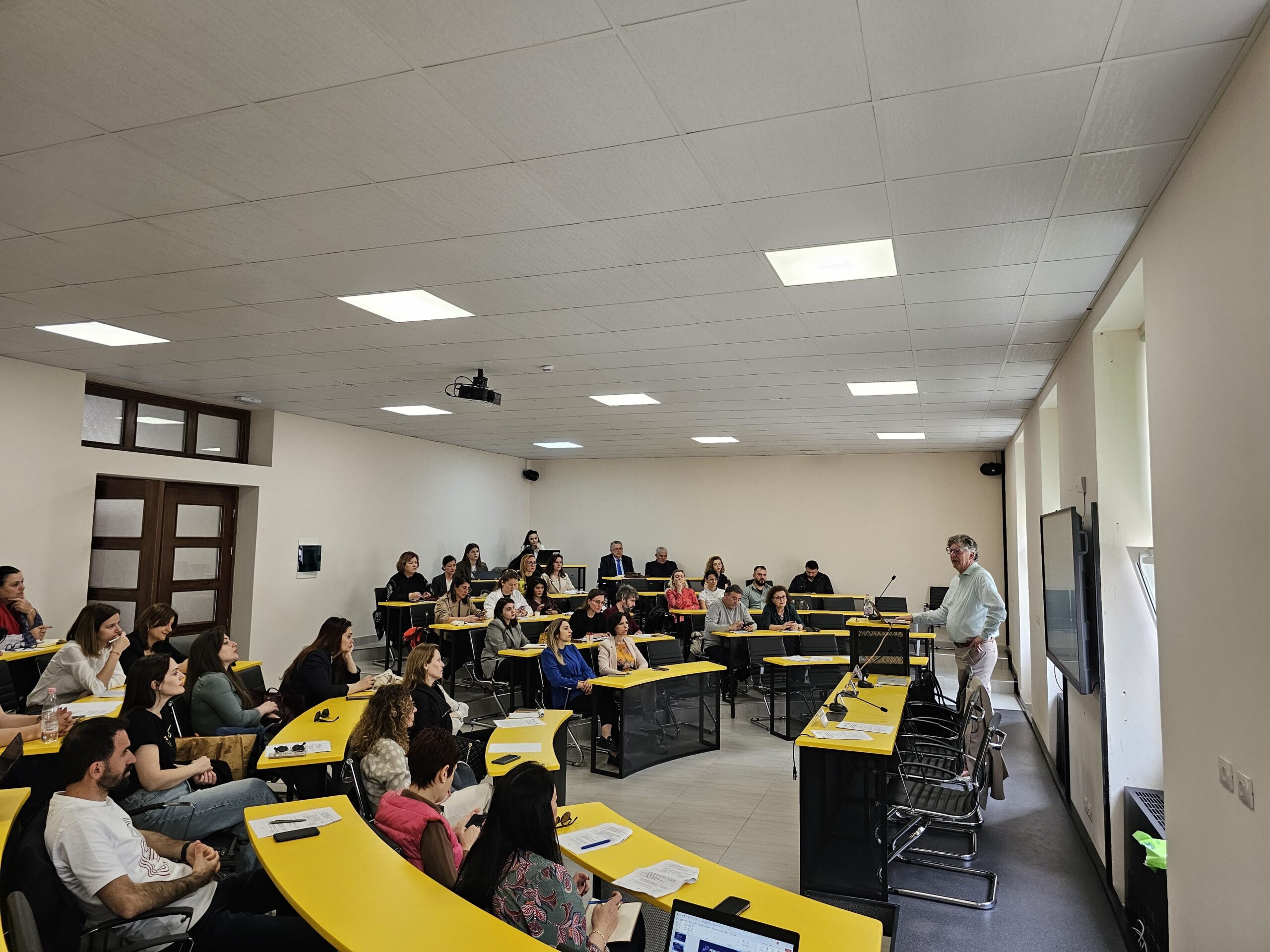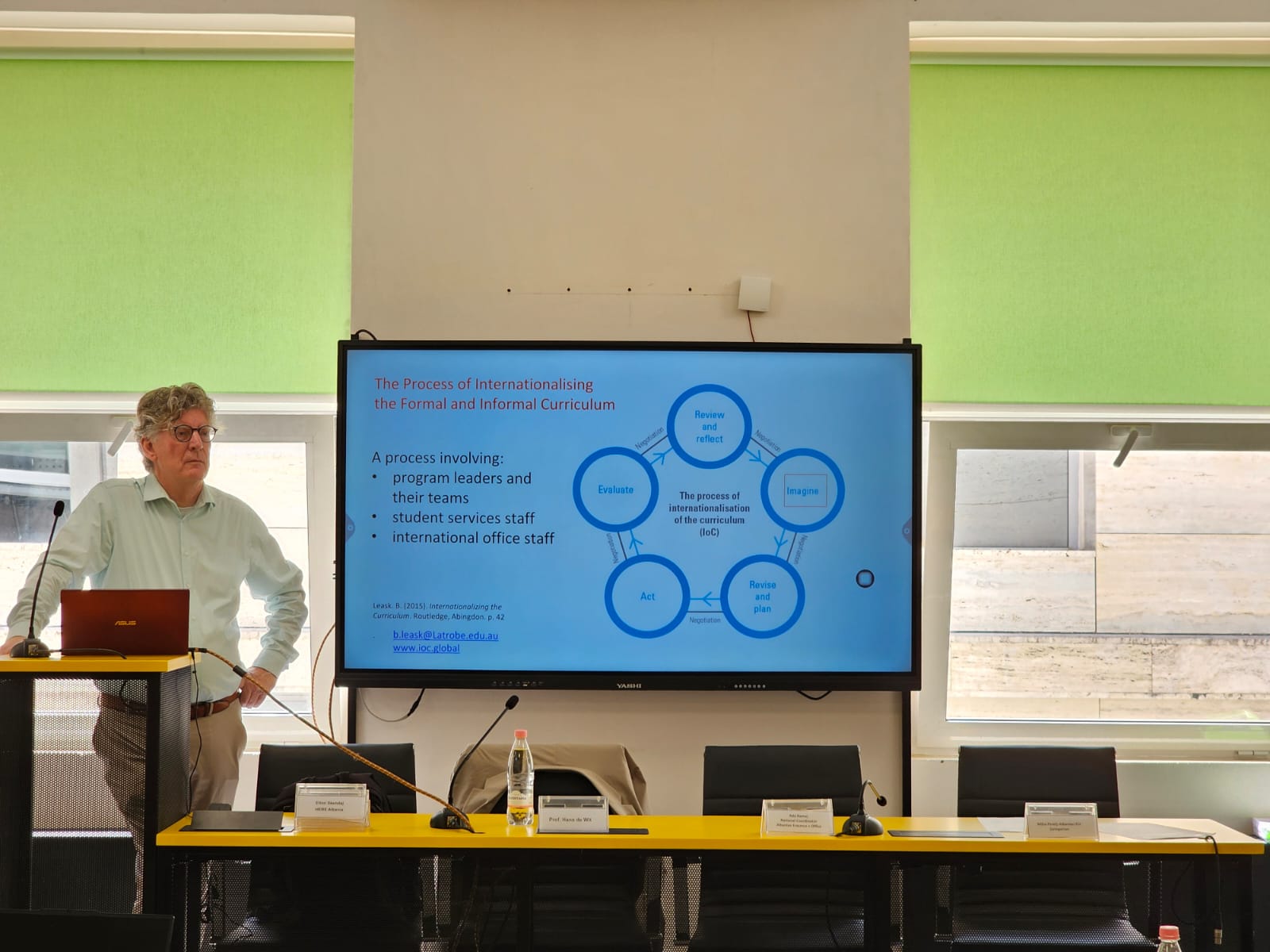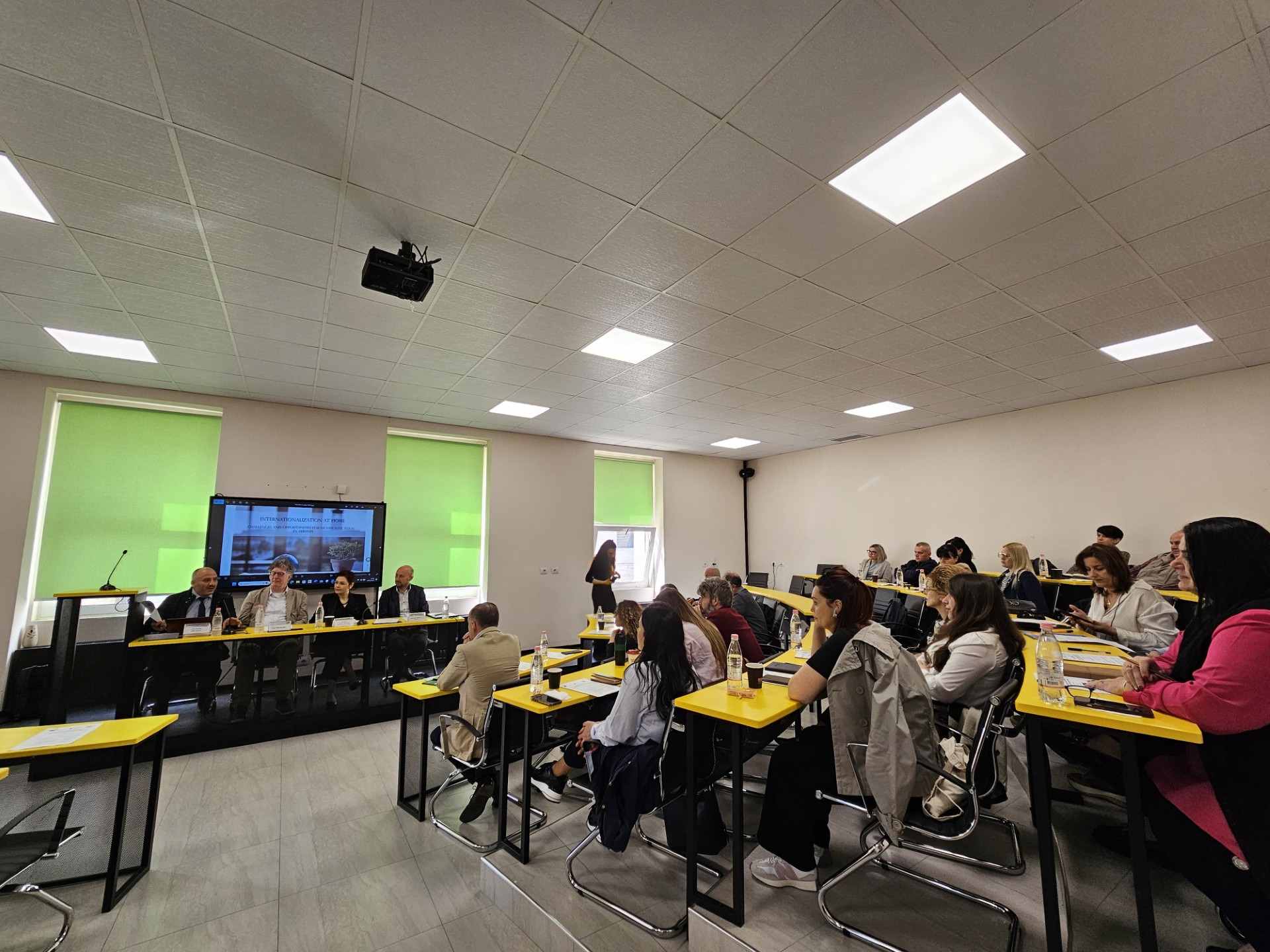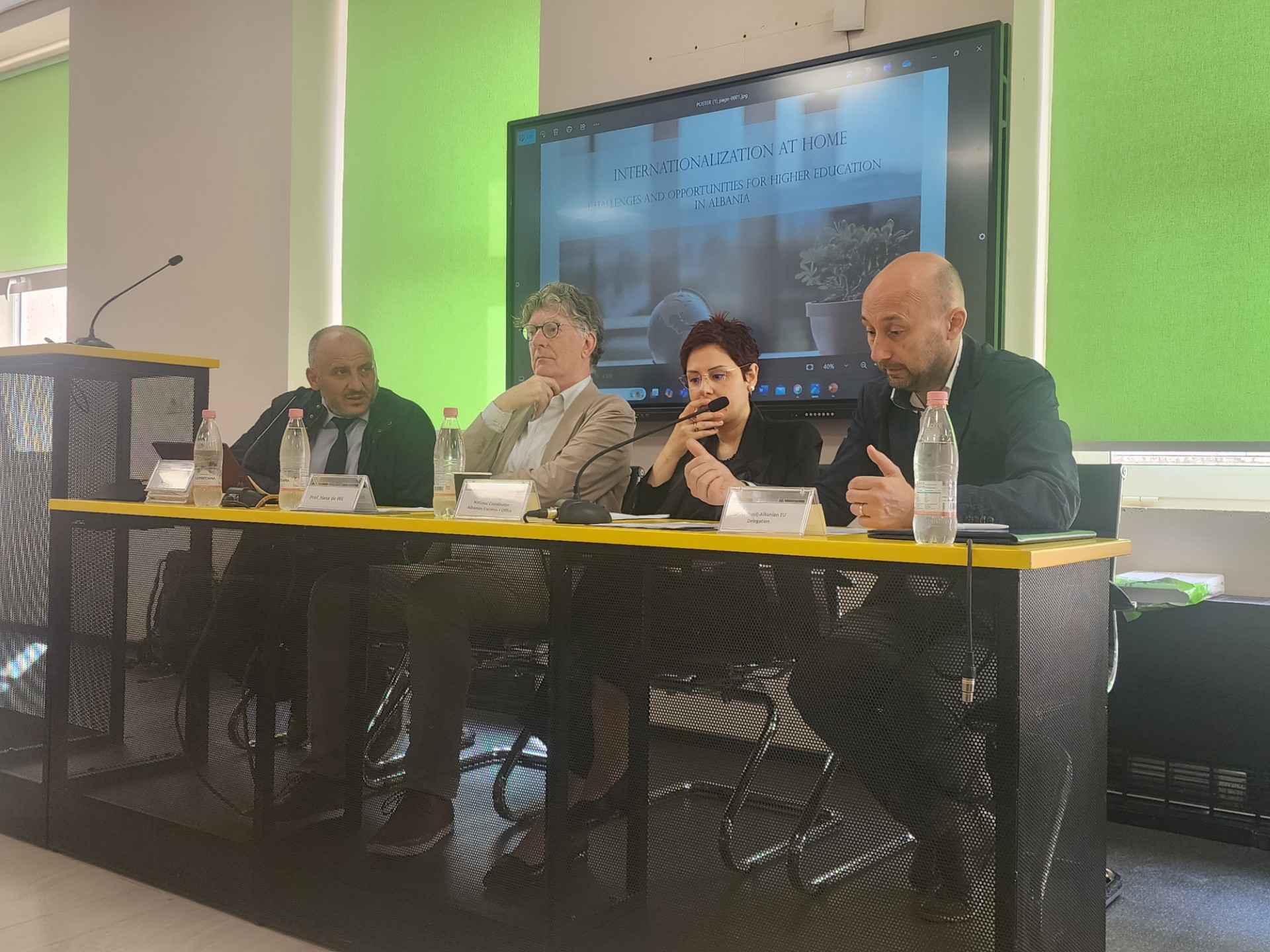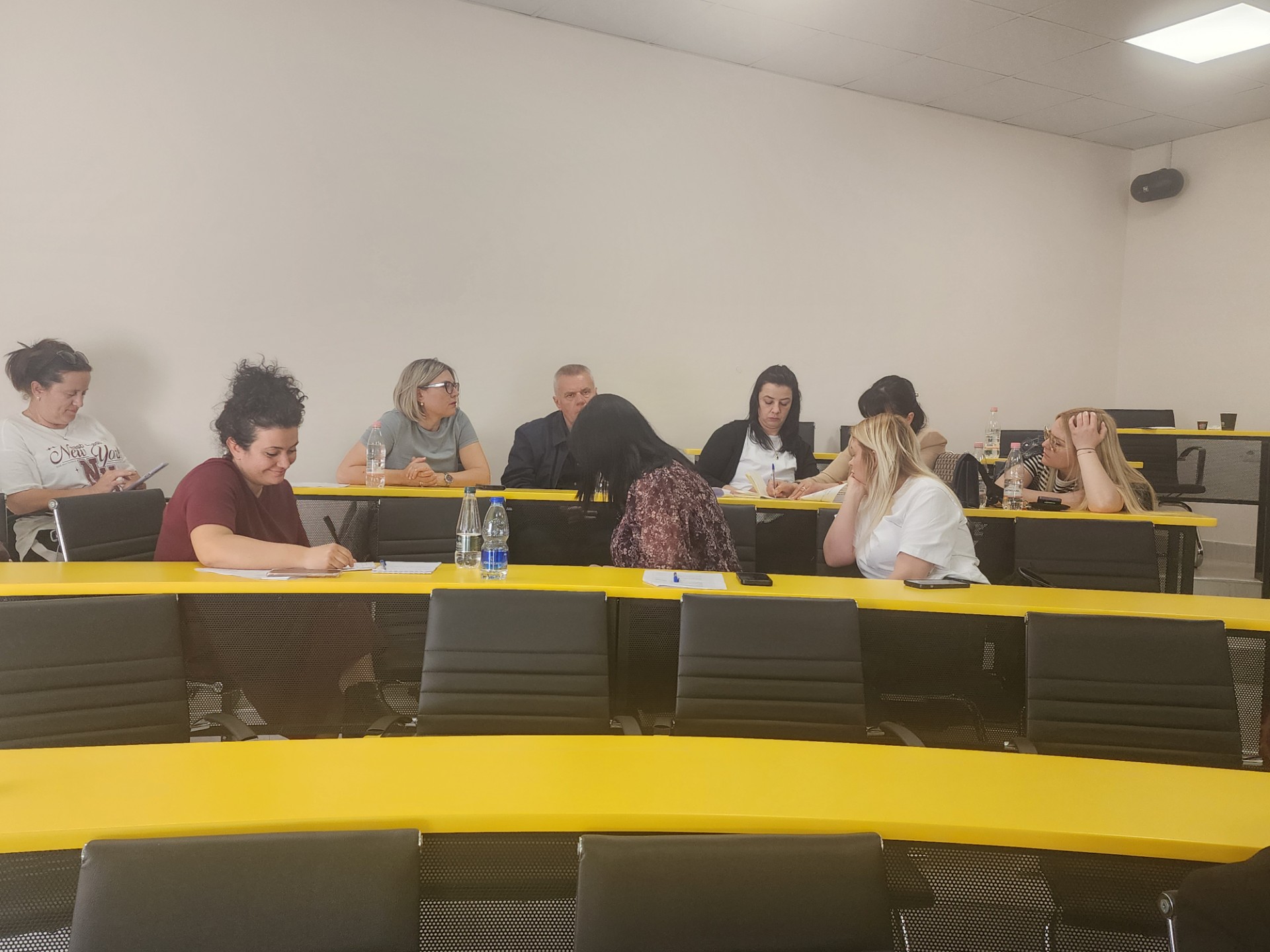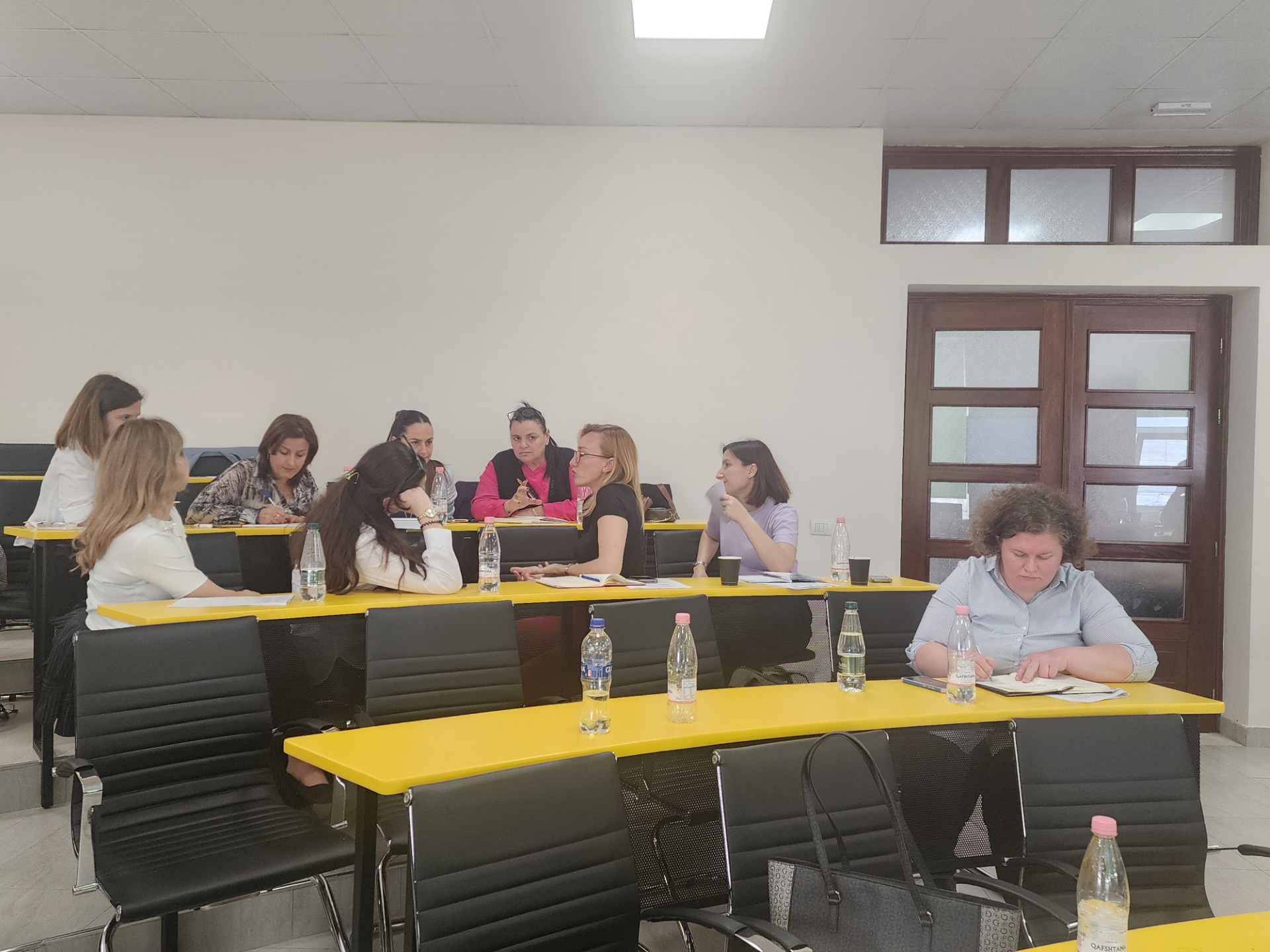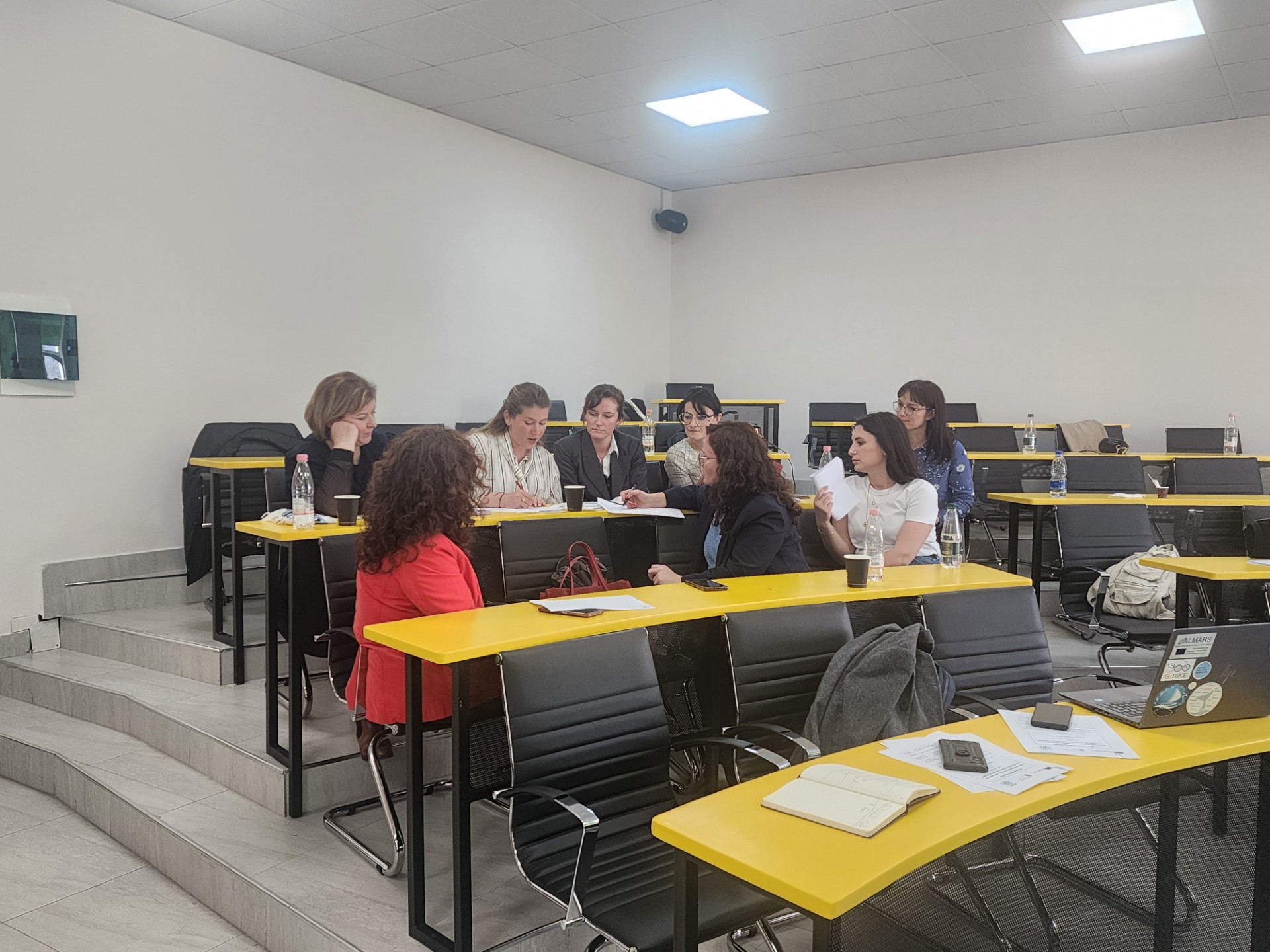
‘Internationalization at Home’ was the main theme of the HERE National Seminar held on April 23–24, 2025, at the premises of the Polytechnic University of Tirana.
The two-day seminar focused on how to create a process through which all students can experience internationalization via a curriculum and learning environment that are international, intercultural, and global in nature.
Prof. Hans de Wit, the SPHERE expert, provided an introductory overview of the concept and development of internationalization both within and beyond higher education.
This was followed by a presentation on the European Higher Education Area and the internationalization of Albanian higher education institutions, delivered by Albanian HERE experts.
At the conclusion of the seminar, the main recommendations were presented by Prof. Hans de Wit and the Albanian HEREs as follows:
-
Promote the professional development of administrators and academics to better understand and implement internationalization, including internationalization of the curriculum at home (IoH).
-
Establish a forum or network for administrators and academics to exchange policies and practices, organize seminars and workshops, define action agendas, and provide recommendations for institutional and system-level leadership. The seminar experts took the initiative to launch such a forum, and participants registered to take part.
-
Encourage the Ministry of Education and Sports to develop a national strategy for the internationalization of higher education in cooperation with universities.
-
Increase focus on accreditation and quality assurance in relation to the qualitative dimensions of internationalization, not solely on quantitative indicators.
-
Address key obstacles, particularly issues related to the recognition of foreign diplomas and academic credits.
-
Develop a national policy on teaching in languages other than Albanian, clearly defining the rationale and expected outcomes, in close collaboration with universities.
-
Promote initiatives to make the Erasmus+ program more reciprocal—not only by supporting outgoing mobility but also by enhancing incoming mobility—through support mechanisms and the development of a “Study in Albania” policy/brand.
-
The Ministry of Education and Sport, Erasmus+ Office, and universities should collaborate on producing an annual report containing data, trends, and analysis of key challenges and opportunities in the field of international cooperation and exchange.
12132021_GUNI_paper_final.docx
Internationalization in higher education global trends and recommendations for its future
De Wit-Merkx The History of Internationalization of Higher Education.docx